Rights of Nature: From Law to Action
{{ time.start_TS | TS2dateFormat('MMM') }}
{{ time.start_TS | TS2dateFormat('YYYY') }}
| Free of admission, please register via Berlin Science Week |
| 16 years and older |
| English |
| Humboldt Lab, 1st floor |
| Belongs to: On Water |
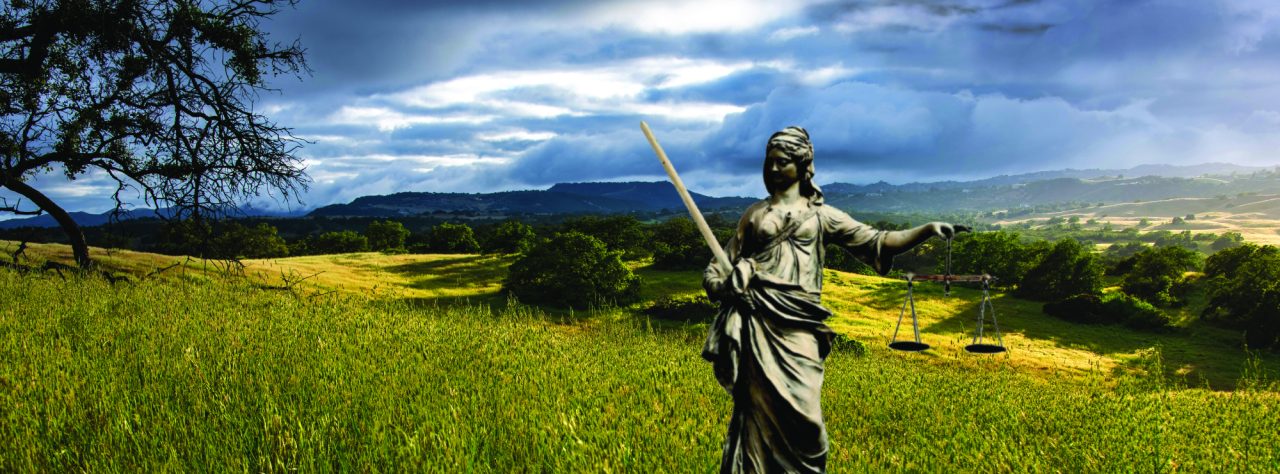
What rights should nature have? Who can represent ecosystems in Europe? How can we turn legal ideas into action and collective imagination Join us for a 2-day event uniting experts, activists, artists & the public to explore Rights of Nature through dialogue, mapping, workshops & creative action, turning ideas into visions for change.
Together with experts, activists, artists, and the public, we’ll tackle some of the most pressing questions of our time.
Why join?
Because the Rights of Nature are not only a legal question — they are a collective challenge, a cultural shift, and a call for new forms of activism. Together, we imagine how law can serve the planet.
Organised by the Young Environmental Research and Advocacy Hub Europe (YERA Hub).
Day 1: Dialogue & Mapping
Saturday, 8.11. 1–6 pm
Open roundtables with leading scholars, practitioners, and activists invite deep reflection on the concept and potential of Rights of Nature. The day closes with a participatory mapping exercise of how Rights of Nature fit within broader value systems and protect ecosystems like the Spree River.
 13:00–13:30
Welcome Coffee & Opening Words
13:30–14:30
Roundtable Part 1: Which substantive rights should nature have and how do we define natural entities?
14:30–15:00
Coffee Break
15:00–16:00
Roundtable Part 2: Who can represent European natural entities? Finding consensus
16:00–17:00
Break
17:30–18:00
Participatory Mapping and Closure
Day 2: Tools & Transformation
Sunday, 9.11. 11 am–4:30 pm
–4 pmFrom philosophical dialogues on indigenous and cosmological perspectives to a hands-on legal protest workshop on protest, campaigning, and creative activism, this day bridges theory and practice. We’ll co-create visions, strategies, and even protest banners — turning concepts into action.
11:00–11:30
Welcome Coffee & Opening Words
13:00–14:00
Lunch Break
15:45–16:00
Break
16:00–16:30
Closing Circle
Participants
Milton Almonacid is a cultural philosopher at the intersection of society, science, and technology. His extensive expertise encompasses Indigenous epistemologies, Epistemology of sciences, Decolonization of knowledge, Speculative Futures and Transition design. Currently pursuing a Ph.D. in Transnational Studies at the University of Copenhagen, Milton is dedicated to addressing issues related to decolonization of knowledge based on Mapuche epistemology. Specifically, he explores possible pluralistic futures beyond western narratives.
Margaux Duillet is a law graduate (LL.M.) specializing in public international law. She is the co-founder of Let Us Speak, a Dutch youth-led initiative that works to remove legal and social barriers to protest by translating complex laws into clear and practical tools. She will be representing Let Us Speak and leading the activist workshop during the exhibition.
Alina Friedrich has been leading the organization of the Rights of Nature: From Law to Action event. As the co-founder and advocacy team lead, she works around creating impact based on the research findings of the YERA researchers. She has an interdisciplinary background from politics, psychology and economics with a focus on environmental law (LL.M candidate) and has co-authored a publication about the EU Carbon Border Adjustment Mechanism.
Simon is an ecological artist, agroforester, and transdisciplinary researcher from the UK. In his work for the institute for environmental security, YERA Hub, and the Alliance for Sustainable Pathways in Africa – in addition to his full time role as a regenerative farmer – he brings together expertise from disciplines ranging from sustainable agriculture to ecological philosophy to the study of complex adaptive systems. Particularly he draws from social-ecological systems science and process-relational ontologies to devise novel approaches to tackling wicked problems in a range of different fields (including literal fields). In this context, Simon will be providing a critical ecological perspective, bringing to light developments from theoretical biology, evolution, complex systems, and quantum physics to challenge our modern scientific and legal paradigm.
André Horenburg is a partner at the Hamburg-based law firm Rechtsanwälte Günther and has longstanding experience in defending protestors and activists. He works in public, environmental and assembly law, advising municipalities, NGOs, citizens’ initiatives and individuals. He also has a degree in fine arts. He will take part in the activist workshop in collaboration with Let Us Speak, contributing his expertise on German protest and assembly law.
Anna Hatzuis Sarramona is a legal researcher with an interdisciplinary background. As a co-founder of the YERA Hub, she has led the organization’s research cycle on Rights of Nature. Her work focuses on developing interdisciplinary methodologies to address complex legal questions. Beyond YERA, Anna researches environmental criminal law and its intersections with Rights of Nature.
Anja Popp studied law in Heidelberg and Dublin. She completed her legal clerkship at the Mannheim Regional Court. Since the end of 2023, she has been working as a lawyer at the law firm „Günther Rechtsanwälte“ in Hamburg. Her main focus is animal welfare law. She represents animal welfare associations and environmental protection organizations in criminal, administrative, and freedom of expression law.
Emmanuel Schlichter, LL.M. (Kent), is a qualified lawyer who studied law at Ludwig Maximilian University of Munich (LMU) and earned a Master’s degree in International Political Economy from the University of Kent. He applies his legal expertise in diverse and innovative ways to promote systemic and sustainable transformation. As the founder of Rechte der Natur e.V., he works to anchor the rights of nature in European law. Through the project “Rechte der Spree” (Rights of the Spree), he is also pursuing a concrete example of how the rights of ecosystems can be legally recognized and made effective in German society.