Call for Participation
Submission deadline: 31.05.2026
| English, German |
| Humboldt Forum |
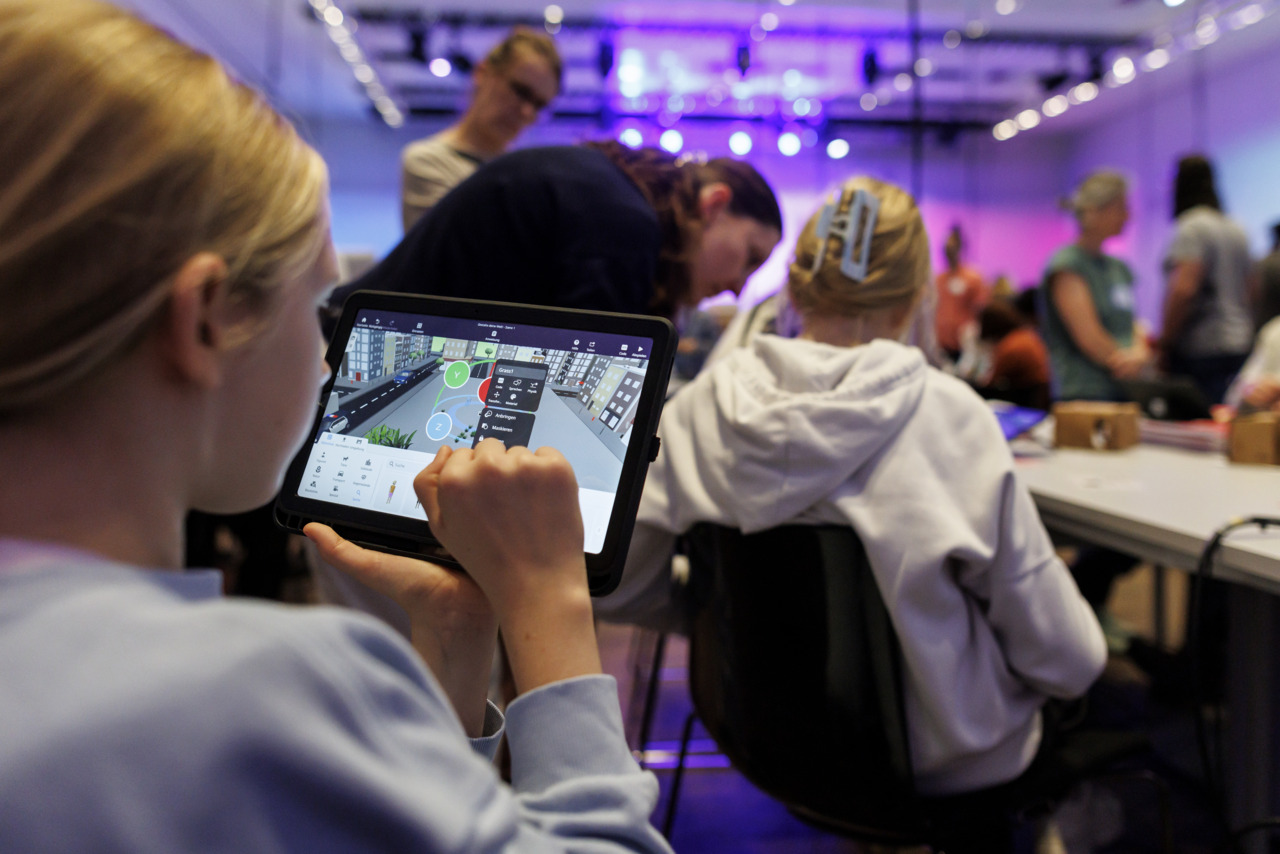
As part of the Europe-wide Code Week, Stiftung Humboldt Forum and Verbund der Öffentlichen Bibliotheken Berlins will be hosting a joint event at the Humboldt Forum for the fifth time in autumn 2026. On Saturday, 10 October 2026, from 11 am to 6 pm, a free, public hands-on festival will take place, where visitors of all ages can discover and try out educational and outreach activities on digital topics at a wide variety of stations.
Institutions, initiatives and organisations are warmly invited to take part with a hands-on activity. A prerequisite for participation is that the content relates to this year’s thematic focus. Under the festival motto ‘Rethink, Rebuild, Reshape!’, we would particularly like to encourage engagement with the following three thematic areas:
Environment and Sustainability
Digital technologies make our lives easier. Yet digital progress often conflicts with environmental responsibility. Every device, every app, cloud service and AI system requires energy and natural resources: electricity, water, metals and rare earth elements, which are mined under precarious conditions. How can we use digital applications and devices more sustainably? How, in turn, can modern technologies contribute to environmental protection and sustainability?
Digital Responsibility
In the digital world, every click leaves a trace. Digital technologies open up countless possibilities for us, but they also demand responsible and prudent behaviour. The use of AI requires an awareness of its limitations, biases and hallucinations. Anyone who shares, comments or publishes bears responsibility for the content and tone, and the consequences that arise from them. Anyone who shops, streams or Googles makes themselves vulnerable to manipulation and identity theft. How can we raise awareness of these challenges? How can we make digital technologies safer?
Colonialism and Decolonisation
The legacy of colonialism continues to have an impact today – in global power structures, economic inequalities, cultural representations and self-perceptions. Over centuries, colonial conquest and exploitation created hierarchies from which modern forms of racism emerged. Colonial patterns and prejudices continue to shape our thinking and actions to this day, calling for a critical examination of historical references and bodies of knowledge. How can digital technologies support decolonisation? How can they help to acknowledge historical responsibility and promote global justice?
Proposals for programme contributions can be submitted until 📌31 May 2026 via the online questionnaire.
We look forward to your contributions!
Partner