be mAI friend
{{ time.start_TS | TS2dateFormat('MMM') }}
{{ time.start_TS | TS2dateFormat('YYYY') }}
| Admission: free admission – Humboldt Forum ticket required |
| Ticket: Please purchase your ticket in advance online or at the box office in the foyer. |
| Suitable for: 14 years and older |
| Venue: Ground Floor |
| Belongs to: Given or Chosen? |
be mAI friend
„AFFEKTATOR 3000“
Have you ever thought about becoming friends with an AI? At the Humboldt Forum, that’s possible.
In an increasingly digitalized world, artificial intelligences that act as friends, family members, or pets are gaining emotional and social relevance.
For the festival “Chosen or Given?”, a chatbot was developed that explores the themes of human-machine interaction, AI friends, and digital relationships.
Meet the AFFEKTATOR 3000, which provides first aid for acute lack of connection—or at least tries to. What happens when you engage in conversation with it?
The project invites visitors to directly experience and reflect on the relationship between humans and AI in an interactive space. The installation raises questions about closeness, loneliness, empathy, and the role of technology in interpersonal relationships. It opens up a space for critical engagement with the opportunities and risks of digital companions and invites you to question your own relationship with AI.
And if it doesn’t work out, you can just delete your new “friend” at the end—right?
The Oasis I deserve
The exhibition also features the work “The Oasis I Deserve” by Inès Sieulle, which explores the relationships between people and Replika, one of the most widely used AI companion platforms—an AI tool designed not as an assistant system, but as a friend, partner, or confidant. To create this, Sieulle used real recordings of conversations between users of the platform and their digital companions.
In her film, she shows that Replika functions as a mirror of its over 30 million users, as every interaction shapes the AI and influences its behavior. The film contrasts different types of these relationships—ranging from affectionate to aggressive—and raises the question of whether genuine connection between humans and AI is possible, or whether we are merely projecting our own feelings onto it. Ultimately, the central question remains: Where does the line lie between a genuine relationship and mere projection, as humans increasingly develop emotional bonds with AI systems?
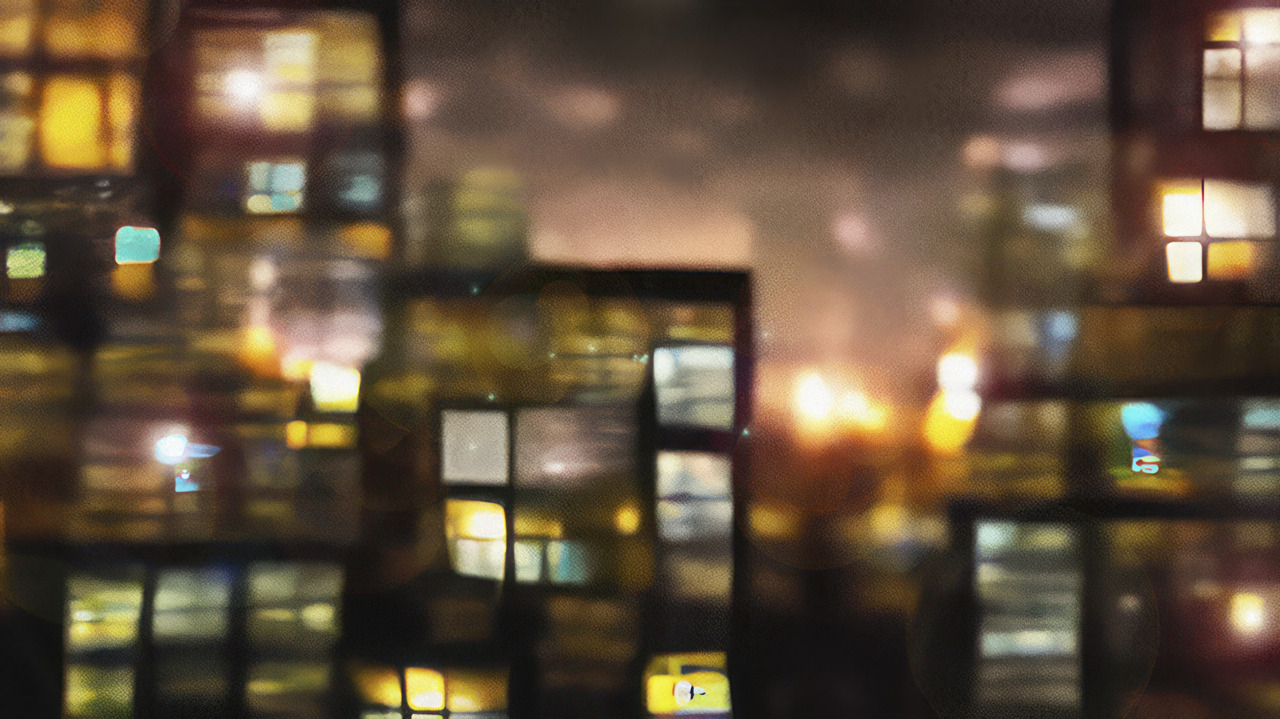
Sieulle´s work is accompanied by surreal, AI-generated images intended to visually convey how an AI “thinks.” With the help of the VQGAN neural network, new, dissolving forms constantly emerge—somewhere between abstraction and recognizability—whose glitchy aesthetic symbolizes the fragmented identity of an AI.
© Inès Sieulle, KI generiert, Year / Running Time: 2024, 22‘, Countries: France , Production: Too Many Cowboys, Distribution: Protest Studios/Solal Films, Cinematography: Inès Sieulle
Participants
Ilja Mirsky studied Cognitive Science and Performance Studies in Tübingen, Hamburg, and Haifa. Since 2022, he has been a dramaturg and digital dramaturg at the Residenztheater in Munich. He is pursuing a doctorate in theater and digitality at the University of Tübingen and the Zurich University of the Arts (ZHdK), is a research associate in the Performing AI research project at ZHdK, and teaches at the Academy of Performing Arts Baden-Württemberg.
Inès Sieulle is a French artist and filmmaker based in Paris. She studied at the École Nationale Supérieure des Arts Décoratifs in Paris before joining Le Fresnoy – Studio national des arts contemporains and l’École des Hautes Etudes en Sciences Sociales. Her work aims to shed light on the contemporary social dynamics that surround her in a documentary and fictional approach.
Her multi awarded short documentary “The Oasis I Deserve” has been selected for the César of best documentary short 2025 and has been selected in 40+ festivals around the world. It has also been exhibited in various places in Europe like in Jeu de Paume, in 2025.
Tim Deussen is an artist, creative technologist, and Director of Studio Deussen in Berlin. His work explores the intersection of art, technology, and society, with a special focus on how AI can be meaningful not only as a tool, but also as a cultural and social force. Working in collaboration with artists and institutions, he creates formats that open public spaces for exchange and invite collective reflection on relationships, belonging, and the ways new technologies are shaping life together.