fuga. Sound Performance in the Hörraum
{{ time.start_TS | TS2dateFormat('MMM') }}
{{ time.start_TS | TS2dateFormat('YYYY') }}
| Ticket required for the Long Night of Museums |
| Venue: 2nd Floor, Listening Space |
| Belongs to: Long Night of Museums 2026 |
A live performance that sets archival sounds from 1930s Egypt in motion, mobilising queer histories and migratory narratives into an immersive listening experience.
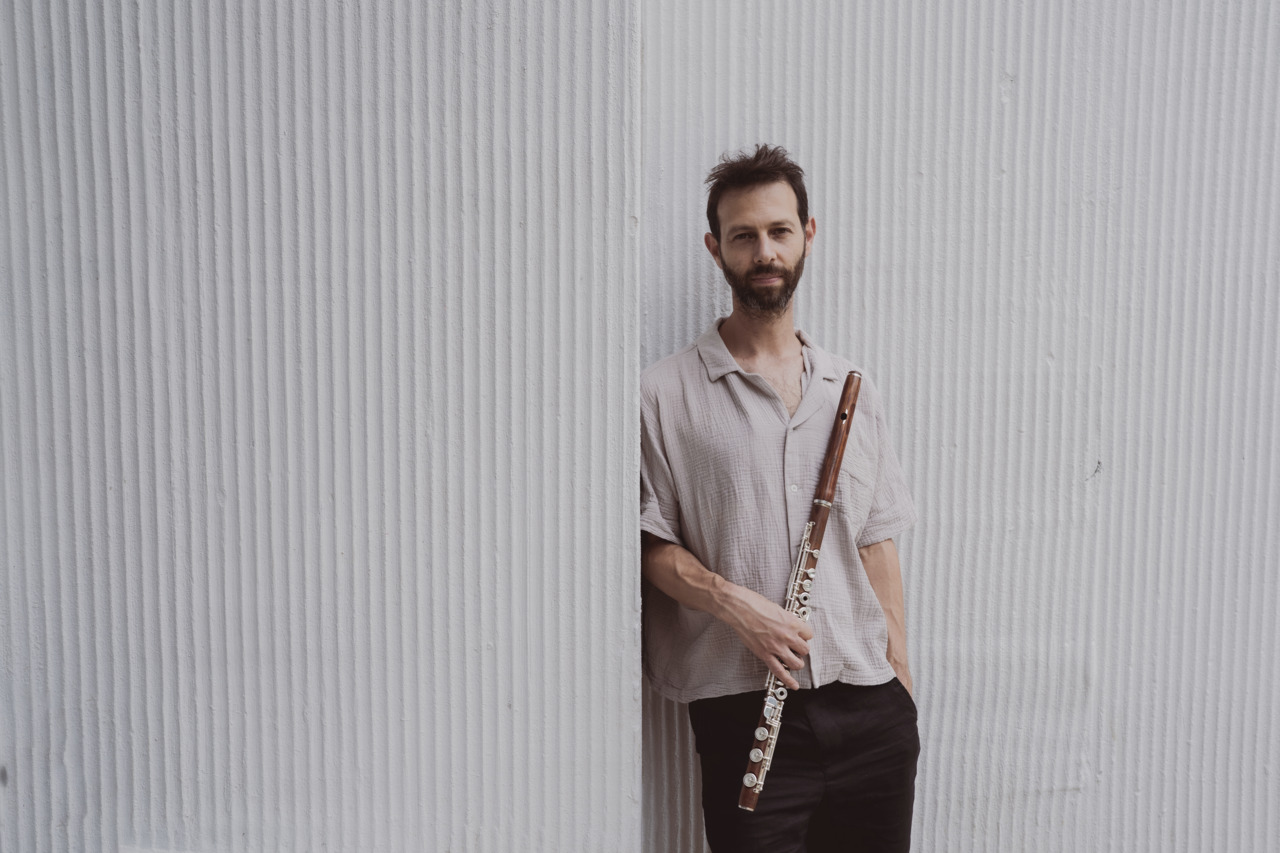
fuga is a sound exhibition by artist Netta Weiser, presented in the Humboldt Forum’s Hörraum (Listening Room). As part of the Long Night of Museums, the installation comes to life through a special performance by flutist Roy Amotz, interweaving archival material, electronic sound, and live improvisation.
This exhibition fuga reactivates an archive of audio recordings made in Egypt in the 1930s by Birgitte Schiffer, a Jewish-German composer whose life was shaped by displacement and exile. During her ethnomusicological fieldwork in the Siwa Oasis, an isolated community in the Sahara Desert, Schiffer recorded rare sonic documents, including a funeral song performed by a children’s choir and a collection of queer love songs.
Developed specifically for the advanced sound environment of the Humboldt Forum’s Hörraum, fuga transforms these archival traces into a choreography of sound and diasporic memory. In this live event, the historical recordings enter into dialogue with contemporary musical interpretation, extending the installation into a performative encounter.
fuga invites audiences to listen across time and geography, bringing silenced histories of exile, desire, and complex identities into resonance through a sonic world in constant motion.
fuga sound exhibition by Netta Weiser
Curator: Maurice Mengel
Performance with and by Roy Amotz
Installation in collaboration with:
Flute: Roy Amotz
Electronics: Michael Hauschke
Vocals: Chanan Ben Simon
Video: Itay Marom
Special thanks to Dr. Matthias Padzerny, Albrecht Wiedmann, Eleanor and Naomi Volaski Aram
Commissioned by the Media Department, Ethnologisches Museum, Staatliche Museen zu Berlin Supported by Artis through its Exhibition Grant Initiative
An early version of this work was presented at the Maamuta Center for Art and Research at Hansen House, Jerusalem, supported by the Goethe-Institut Jerusalem Residency Program.