Water and Life in Space – Facts and Fiction
{{ time.start_TS | TS2dateFormat('MMM') }}
{{ time.start_TS | TS2dateFormat('YYYY') }}
| Planning: Duration: 90 min |
| Which languages: German |
| Venue: Humboldt Lab, 1st floor |
| Part of: On Water |
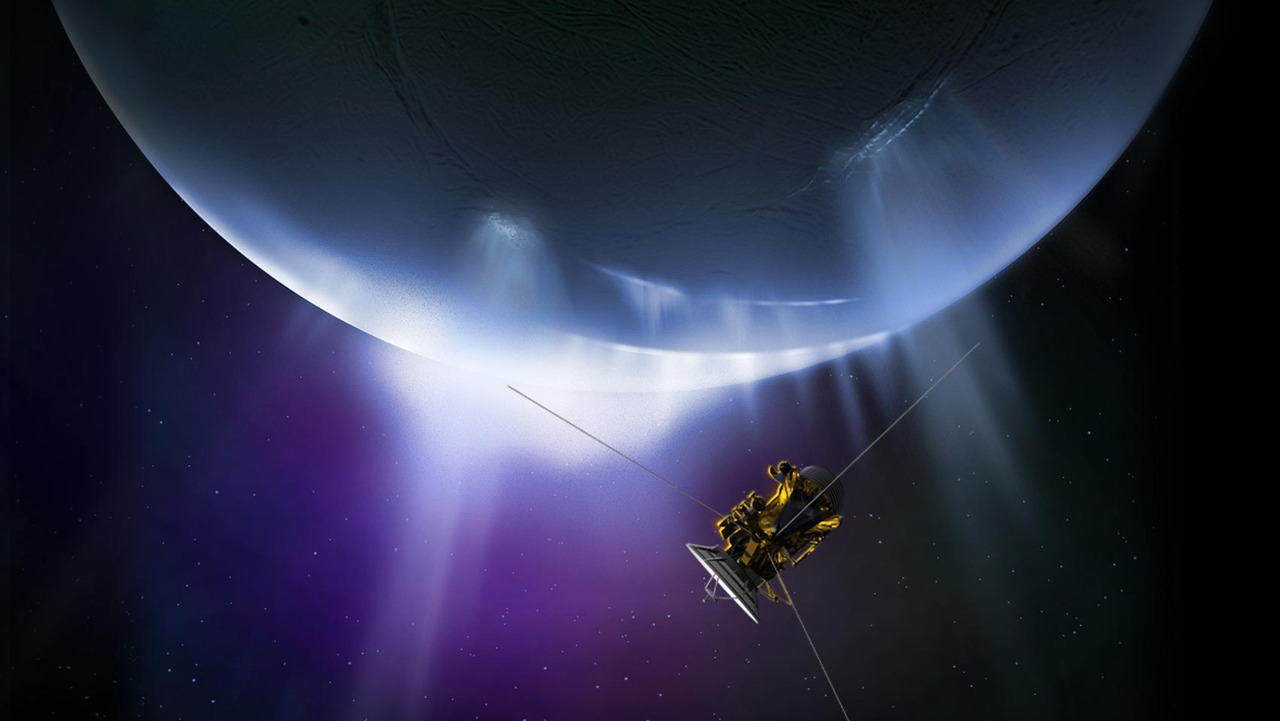
What fascinates us about the possibility of life in space? Is it the idea of something completely unfamiliar, or is it the hope of learning more about ourselves? Space probes have discovered ice, vapor, and water-bearing rocks on distant celestial bodies, and with every new discovery, the question grows: How special is life on Earth, really?
Scientists from the new Collaborative Research Center “Planetary Habitability” drawing on the fields of planetary science, psychology, and media studies discuss what we actually know today: Is there life in space, and what might it look like? What do our ideas about it reveal about ourselves and our view of the unknown? And how would an actual discovery of extraterrestrial life shift our perspective?
Participants
Steffi Pohl is a psychologist and professor of Methods and Evaluation/Quality Assurance in the Department of Education and Psychology at Freie Universität Berlin. Her research focuses on quantitative methods in psychology, particularly the development and application of statistical procedures for measuring psychological characteristics and analyzing causal relationships. The goal of her work is to make psychological and social science research more methodologically sound, precise, and easier to interpret. For her scholarly achievements, Steffi Pohl has been honored with, among other awards, the Early Career Award from the Psychometric Society and the Gustav A. Lienert Dissertation Prize from the German Psychological Society. A distinctive feature of her work is the interdisciplinary application of psychological and statistical methods. In her current research collaborations, she works with scholars from the natural sciences, humanities, and social sciences, addressing, among other topics, the societal consequences of the search for life in space and possible forms of human presence on other planets.
Michael Waltemathe is a Senior Lecturer at the Faculty of Protestant Theology at Ruhr University Bochum. His work explores the intersection of religion, education, media, and the natural sciences. His research focuses, among other things, on space travel and religion—specifically, the theological, philosophical, and ethical aspects of human spaceflight. In his lectures and projects, he explores cultural and religious interpretations of space, science fiction, and the question of how humans understand.
Frank Postberg is a professor of planetary science at Freie Universität Berlin. His research focuses on habitable oceans in the outer solar system, and he is involved in several international space missions, including NASA’s Europa Clipper mission. Among his most notable discoveries is the detection of salt, organic compounds, and phosphates in the ocean of Saturn’s moon Enceladus.
Ulrike Ernst-Auga is a cultural and religious studies scholar and Professor of Religious Studies and Intercultural Theology at Humboldt University of Berlin. She is also an Associate Research Fellow at Stellenbosch University (South Africa) and an affiliated researcher in the German Research Foundation (DFG) Research Training Group “Transformative Religion: Religion as Situated Knowledge in Social Processes of Knowledge Production”. As a Fellow of the Center of Theological Inquiry (CTI) in Princeton, she participated in the NASA-funded fellowship programme “Inquiry on the Societal Implications of Astrobiology”, where she conducted research on the epistemological foundations of astrobiology. Her work brings together Religious Studies, Gender Studies and postcolonial epistemologies with questions of visuality, digitalisation and space research. She developed the concepts of “Religion as Situated Knowledge”, “Religion as a Discursive, Intersectional and Performative Category” (DIP), and “Extended Epistemological Analysis” (EEA). Her recent article on decolonising space exploration was published in Iglesia Viva in 2026. Ernst-Auga’s work has been recognised with the Käthe Leichter Prize of the University of Vienna, the Mary Douglas Prize of the University of Lausanne, and the Humboldt–Princeton Strategic Partnership Grant. She has also reached a wider public through the ARTE documentary “Flick Flack – The Yoko Ono Effect”.
www.ulrikeauga.com
Elisaveta Ernst is an art and image historian specialising in the history and theory of photography. She works as Research Coordinator at the Centre for Advanced Study inherit. heritage in transformation at Humboldt-Universität zu Berlin. Previously, she was a research associate at the Chair of Eastern European Art History at the Institute of Art and Visual History, Humboldt-Universität zu Berlin. Her doctoral dissertation received the 2024 Rudolf Arnheim Award for Early-Career Scholars. Elisaveta Ernst’s research – currently conducted within her project “Imaging the Invisible: Epistemological Critique and Exoplanetary Heritage in the Context of the Dark Universe” – focuses on model theory and the critical analysis of image-based knowledge production in art and science.
https://inherit.hu-berlin.de/team/elisaveta-ernst