America first, Europe alone?
{{ time.start_TS | TS2dateFormat('MMM') }}
{{ time.start_TS | TS2dateFormat('YYYY') }}
| Admission: free admission |
| Planning: Duration: 120 min |
| Suitable for: 16 years and older |
| Which languages: German |
| Venue: Hall 1, Ground Floor |
| Part of: ZEIT Forum Wissenschaft |
Hardly any other country has shaped Germany and Europe as profoundly as the USA over the last 80 years – politically, economically, culturally and in terms of security policy. Yet it is precisely this relationship that is increasingly being called into question. The USA appears less and less like a stable guarantor of democratic order, and more like a global power redefining its role on the eve of its 250th anniversary – with consequences for allies, institutions and international cooperation.
At the same time, the global balance of power is shifting: China is expanding its influence, international conflicts are being negotiated as matters of power, and authoritarian models are gaining appeal in many regions. Are we witnessing a return to the “law of the jungle”? Does this mean the idea of a Western community is disintegrating into national interests? Or is a “new West” taking shape – perhaps comprising the EU, Canada and Australia – that is reorganising rules, values and security?
We will outline the broad trends, distinguish short-term excitement from long-term trends – and discuss which scenarios are realistic and what options are now available for Europe and the world.
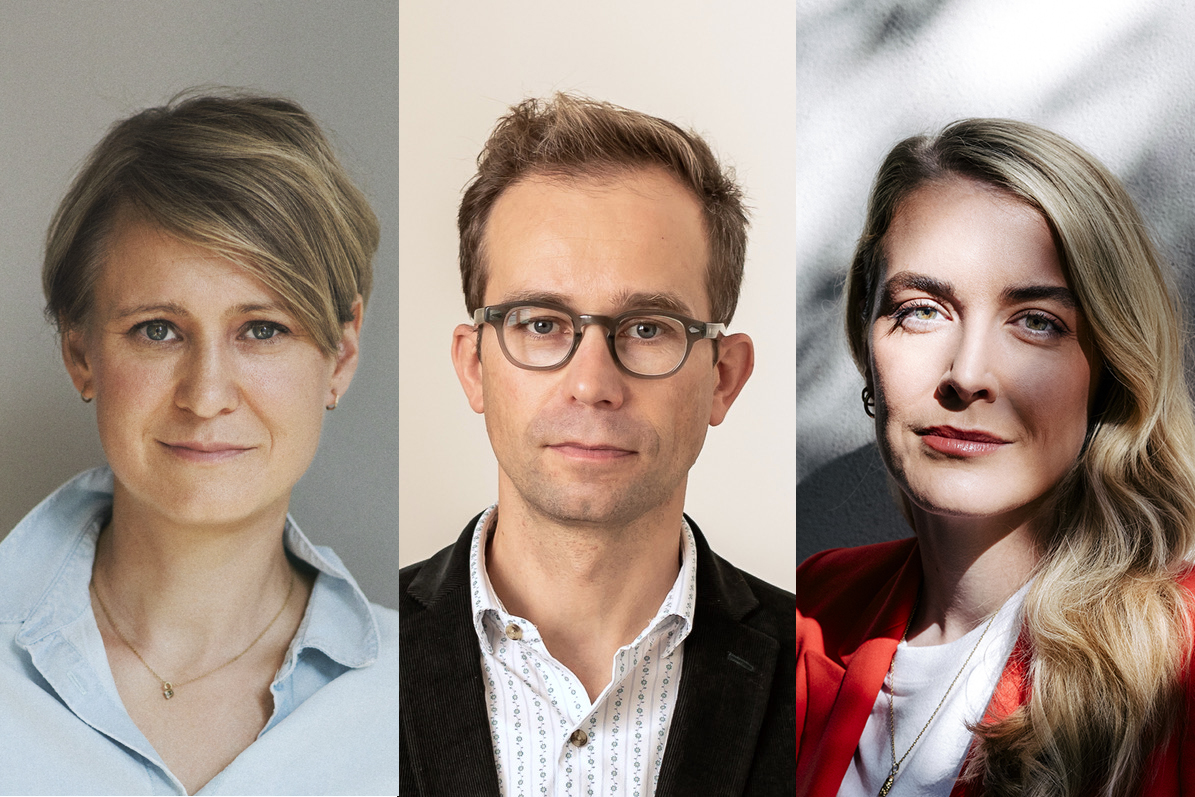
On the podium: Annika Brockschmidt, journalist and book author, Jana Puglierin, political scientist and director of the European Council on Foreign Relations, Sören Urbansky, historian. The panel will be hosted by Anna-Lena Scholz (DIE ZEIT) and Ralf Krauter (Deutschlandfunk).
Please note: The discussion will be held in German, no translation will be provided.
About the ZEIT Forum Wissenschaft
The ZEIT Forum Wissenschaft is a collaboration between the weekly newspaper DIE ZEIT and the ZEIT STIFTUNG BUCERIUS, in partnership with Deutschlandfunk, the Berlin-Brandenburg Academy of Sciences and Humanities, and the Humboldt Forum. This series of events brings together leading experts and an interested audience four times a year. Topics from all fields of science are explored and discussed in depth, both live on site and on Deutschlandfunk’s radio programme.
Panellists
Annika Brockschmidt studied history, German language and literature, and war and conflict studies in Heidelberg, Durham and Potsdam. She is a freelance journalist and author; she has previously worked for ZDF’s Berlin studio, produced the ‘HistoPod’ for the Federal Agency for Civic Education, and is currently co-host of the podcasts ‘Feminist Shelf Control’ with Rebekka Endler and ‘Kreuz und Flagge’ with Lukas Hermsmeier. In 2022, she was awarded a ‘Transatlantic Media Fellowship’ by the Heinrich Böll Foundation.
Her articles have appeared in publications including ZEIT Online, the Tagesspiegel, Freitag, the taz and the Frankfurter Rundschau. Brockschmidt also writes as a senior correspondent for Religion Dispatches. Her book “Amerikas Gotteskrieger” (America’s Holy Warriors) on the power of the religious right in the US was a bestseller in 2021.
Jana Puglierin is a Senior Policy Fellow at the European Council on Foreign Relations and has been Head of its Berlin office since January 2020. She also leads the ECFR project “Re:Order”, which explores new visions of the world order and the interplay between economic power and geopolitical influence.
Her work focuses on German and European foreign, security and defence policy, as well as Germany’s role in Europe and transatlantic relations. She is a frequent commentator in German and international media and writes a monthly column for the Handelsblatt. Her book “Who Defends Europe? The New Threats of War and What We Must Do to Protect Ourselves” was published in January 2026 by Rowohlt in Germany.
From December 2015 to December 2019, she headed the Alfred von Oppenheim Centre for European Future Issues at the German Council on Foreign Relations (DGAP) and worked as a research fellow at the DGAP’s Berlin Forum Zukunft from September 2013 to November 2015. Before joining the DGAP, she worked as an advisor to a Member of the German Bundestag on disarmament, arms control and non-proliferation, as well as German and European foreign and security policy. Between 2003 and 2010, she was a research assistant and lecturer at the Department of Political Science and Contemporary History and on the North American Studies programme at the University of Bonn.
After completing her A-levels, she attended the Cours de civilisation française at the Sorbonne, studied Political Science, Public Law and Sociology at the University of Bonn from 1998 to 2003, and spent a semester at the Venice International University in 2002. As part of her PhD at the University of Bonn, she focused on the life and thought of the political scientist John Herz and conducted research in the United States.
Since January 2023, she has been a member of the German Federal Government’s Advisory Council on Civilian Crisis Prevention and Peacebuilding. In January 2026, Federal Minister of Defence Boris Pistorius awarded her the Bundeswehr Cross of Honour in Gold.
Sören Urbansky is Professor of Eastern European History at Ruhr University Bochum. He is an expert on the history of Sino-Russian relations. His research interests include the history of migration, infrastructure, racism and the history of borders. From 2018 to 2023, he worked at the German Historical Institute in Washington and as Head of the Pacific Office at the University of California, Berkeley. Prior to this, Urbansky taught and conducted research at, among others, the University of Freiburg, Ludwig Maximilian University of Munich and the University of Cambridge. He is the author of several monographs, including “Beyond the Steppe Frontier. A History of the Sino-Russian Border” (Princeton University Press 2020). Most recently, he co-authored, with Martin Wagner, “China and Russia: A Brief History of a Long Relationship” (Suhrkamp 2025). His books have been translated into numerous languages.
Ralf Krauter, born in Esslingen am Neckar, studied physics in Stuttgart, Freiburg and Brighton and has been working for 25 years as a reporter, editor and presenter for “Forschung aktuell”, the daily science programme on Deutschlandfunk. His passion is keeping track of the latest developments in science, research, medicine and technology and bringing them to a wide audience. He has received numerous awards for his journalistic work, including the prestigious Georg von Holtzbrinck Prize for Science Journalism. Since 2023, alongside his role as editor-in-charge at “Forschung aktuell”, Ralf Krauter has also been the host of the Deutschlandfunk podcast “KI verstehen”. He first joined the ZEIT Forum Wissenschaft as a co-presenter back in 2002 and has hosted over 30 events at the Berlin-Brandenburg Academy of Sciences and Humanities alongside Andreas Sentker.
Anna-Lena Scholz is the education editor at the weekly newspaper DIE ZEIT. She writes about education, higher education and science policy, as well as the humanities and social sciences. She studied in Bonn, Oxford and Berkeley and obtained her PhD from the Free University of Berlin.
Partner