Private property: A debt owed to society
{{ time.start_TS | TS2dateFormat('MMM') }}
{{ time.start_TS | TS2dateFormat('YYYY') }}
| Admission: Free admission |
| Venue: Saal 1 , EG |
| Belongs to: Opening Mine. Yours. Ours!?, Mine. Yours. Ours!?, Legacy and property – who owns what? |
Personal property is often used for one’s own purposes: the beloved racing bike, the little house on the outskirts of town, or the valuable record collection. This essay, however, focuses on private property that is used as capital. It can be used to generate profits (for example, in businesses), to earn income without working (such as through rent), and to shift costs onto others (such as environmental damage). This private property is real and, at the same time, a powerful fiction. For it obscures the fact that its value is based on the contributions of many people, including those of previous generations.
In fact, we are witnessing a daily redistribution from the bottom to the top and an enormous concentration of wealth. In Germany, the richest ten percent own about two-thirds of all wealth, while the poorer half of the population owns virtually nothing. Yet these people also go to work, care for the sick, look after children, shape their neighborhoods, volunteer, come up with good ideas, or write poetry. Many contribute to societal prosperity, yet few reap its rewards.
The reason this seems so natural to us is also because many forms of labor aren’t even counted as work. This applies to the people who, in the colonies and even today in the majority world, have produced, and continue to produce, raw materials and goods for our prosperity, often under coercion or exploitative conditions. And it applies to care work, which is primarily performed by women without pay: in the household, in raising children, and in caring for family members. It is often romanticized as a “labor of love,” as if it were not work at all, but simply a natural part of life. Digital activities on social media and other platforms are also typically framed as hobbies, games, civic engagement, participation, sharing, or communication – except that it is precisely through these activities that a few other people can become very wealthy.
Participants
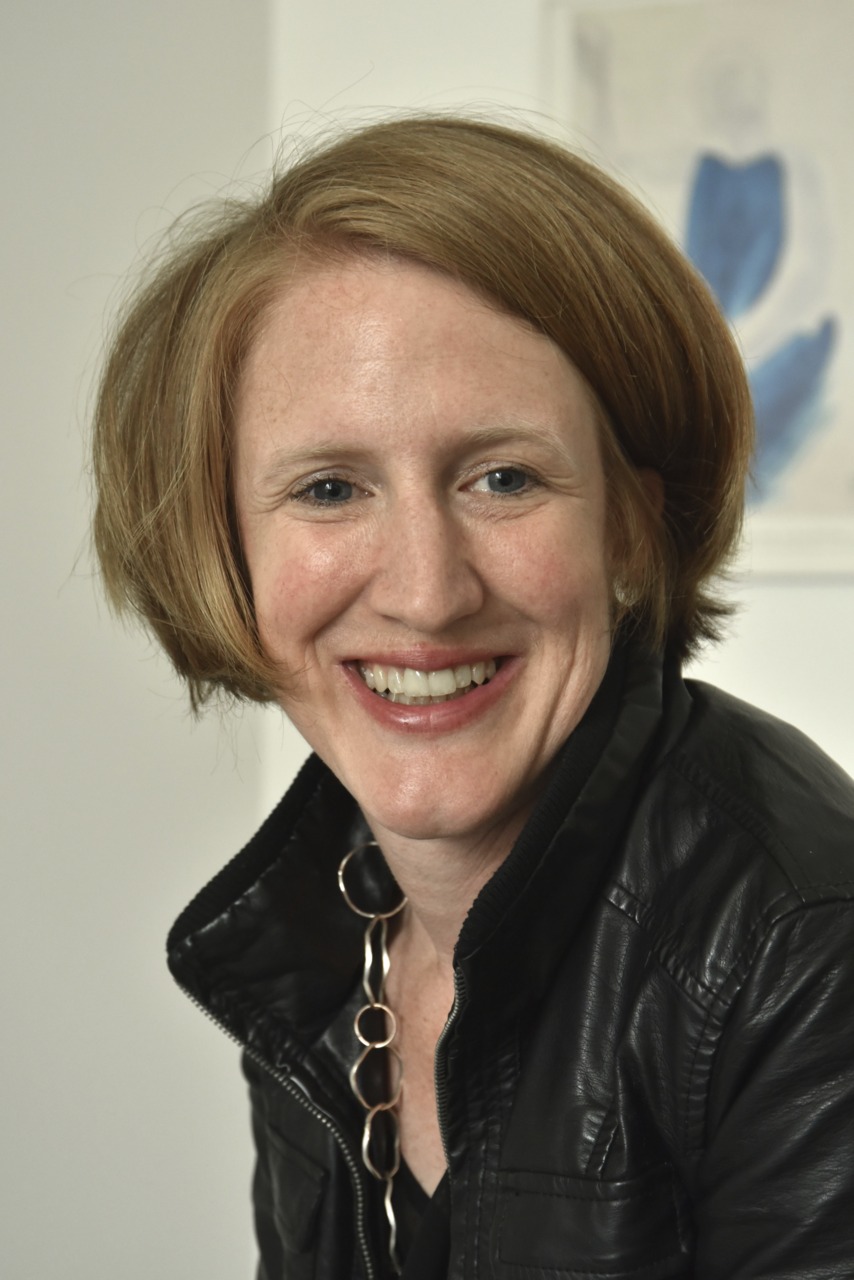
Dr. Silke van Dyk is a professor of political sociology at Friedrich Schiller University in Jena and the spokesperson for the Collaborative Research Center “Structural Change in Property Ownership,” funded by the German Research Foundation (DFG), at the universities of Jena and Erfurt. Her research focuses on social inequality and property relations, the sociology of social policy and the welfare state, the relationship between democracy and capitalism, and alternative economies. Together with Tilman Reitz and Hartmut Rosa, she published the book *After Private Property? Goods, Infrastructures, and Global Relations in 21st-Century Capitalism.” Her analysis of “Private Property as a Privilege” can be found in the journal “Aus Politik und Zeitgeschichte” published by the Federal Agency for Civic Education (Vol. 74, No. 21, 2024, pp. 28–33).